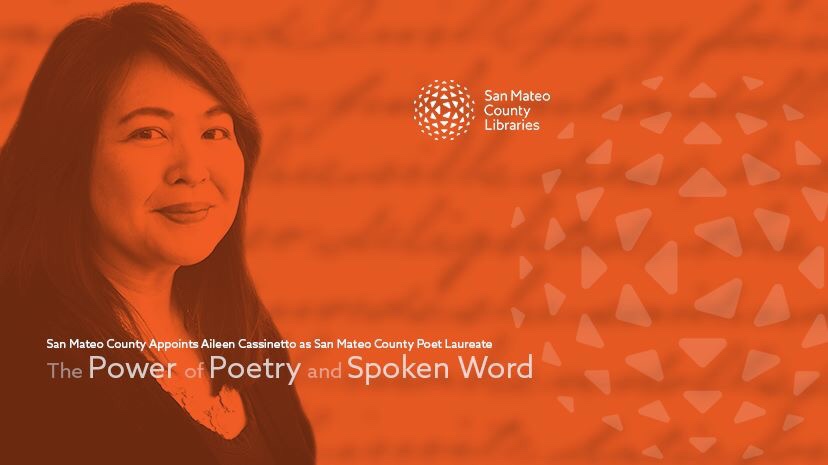
I became a poet because I had a story to tell, ideas I wanted to explore, and spaces I wished to share. “If you are a poet,” says the late and great Thích Nhất Hạnh, “you will see clearly that … [as thin as a] sheet of paper is, it contains everything in the universe in it.” Thích Nhất Hạnh was referring to a way of looking at the world in terms of relationships. This concept I understood very well. I grew up in a collectivist culture whose core values center our shared identities. In Filipino, we call this kapwa, a word that has no direct English equivalent. The language I grew up speaking is very poetic, with a lot of short vowels that create rhythm and vibrancy. And because language is culture, I began a practice, years ago, of writing down words that I found lyrical, or whose etymologies I found pivotal to furthering my understanding of the world. These words became part of my poetry toolbox, and the more I got to know my poetry toolbox, the more I learned to be smarter about my writing, to experiment with form, and to use my background in research as foundation for my craft. Many of my published poems tackle themes of migration, boundaries, and, belonging. As poet laureate, my message is that poetry is for everybody. Between 2019 and 2022, I’ve given poetry workshops and one-on-one mentorships to over 600 middle- to high school students, and below are some of my favorite poetry exercises.
American Sentence
An American Sentence is 17 syllables long, and is a poetic form created by Allen Ginsberg. It is a variation of the haiku, a short Japanese poem which counts sounds, is the length of a breath, and is meant to capture a moment. Haiku’s minimalism appealed to Ginsberg, and thus, American Sentence was his “effort to make American the haiku. If haiku is seventeen syllables going down in Japanese text, he would make American Sentences seventeen syllables going across, linear, like just about everything else in America.” I’ve used the American Sentence as a writing prompt for several writing workshops as this form lends itself to creating distinct vignettes and snapshots of American life. For example, in a single line of 17 syllables, what advice would you give your future self?
Five Senses & Cento
Observation is the foundation of the scientific method; it is also the first step in writing poetry. Our five senses enable us to study in detail the world around us. Scientists, field researchers, nature enthusiasts, and poets often use field notes to record their observations, and for poets, these notes often lead to greater insight and reflection, deeper connections, and/or as a way to tap into one’s memories and experiences. “By referencing senses… poets can invoke strong emotions.” For this exercise, I’ve asked students to make a list of things they hear, see, touch, smell, and taste. For ecopoetry workshops, I would also ask students to read climate change articles, and highlight the lines that resonated with them. (The latter can be a separate poetry exercise on found poetry, which is created by borrowing text from various sources, such as newspapers or magazines.) To write the poem, we learned to pare down lines to include only the most necessary words, and to intersperse observations with found lines from the climate change articles. An example is the modified five senses-cento poem, “Ideas to Postpone the End of the World,” which is a specific and personal response to climate change.
Hay(na)ku
Invented by Eileen Tabios, this Filipino poem takes the form of a six-word tercet with the first line containing one word, the second line two words, and the third line, three words. Many variations have since been created. I love the form for its diasporic origin and adaptability. As with many poems, the secret lies in the volta which is the shift that transforms the poem.
I Am & Villanelle
This exercise was based on the “Where I’m From” poem by George Ella Lyon. I chose this form because of its accessibility, and because it has helped me remember my roots and honor my past. “I Am” poems prompt us to think about the people and instances that shaped our identities. I’ve always told students that when we know who we are, we are indestructible. Many of the poems featured in my Speak Poetry project were inspired by this form. My own poem, “I Am, Villanelle,” was based on Lyon’s template, which I later edited and redrafted to follow the modern villanelle form, as the rhymes/near rhymes and repetitions allowed me to amplify the expansiveness and intensity of the histories I was tackling.
Tanaga & Text Tula
The tanaga is an indigenous Filipino poem with four lines, each with seven syllables. It is traditionally monorhymed, but modern tanagas may follow alternative rhyme schemes or a more freestyle structure. A fun writing exercise blends the tanaga with text tula, a modern form which came out almost 20 years ago. For this exercise, you may use any language. First, choose a theme, brainstorm words and images, carefully count syllables, and make sure the poem fits the 4-line, 7-syllable-per-line structure. The finished poem can be texted, shared on social media, or simply enjoyed on the page.
Poetry is the most accessible, most rewarding, and most democratic art form in the world: anyone can be a poet. These exercises are only meant to guide participants to discover the joy of crafting a poem. Ultimately, the poem is yours to shape; you control the rhythm, you decide how much you want to say, which words to take out, where to break your lines. Poetry invites you to bend and play with the rules, but it helps to first learn how they work.
 Aileen Cassinetto